
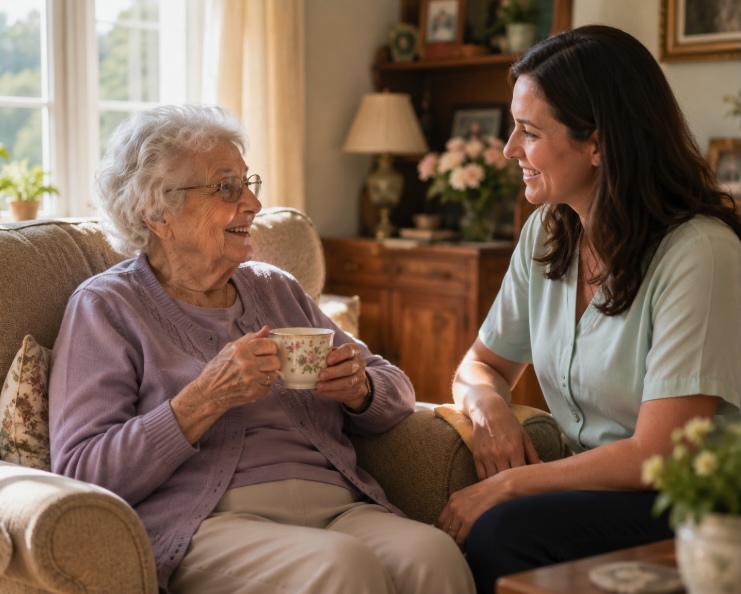
Live-in care is exactly what it sounds like. A professional caregiver lives in the home and provides support around the clock. The senior stays in familiar surroundings. Daily routines remain intact. Family members gain real peace of mind.
This is not the same as a nurse visiting once a day. It is not a check-in service. Live-in care means consistent, personalized support from someone who knows your loved one well.
The caregiver handles personal care, companionship, safety, and household tasks. They are there in the morning, throughout the day, and overnight. If something goes wrong at 2 a.m., someone is already there.
For families navigating a difficult transition, that consistency matters enormously.
What Does a Live-In Caregiver Actually Do?
The day-to-day responsibilities of a live-in caregiver depend on the individual. Care plans are built around each person’s needs and routines. Common responsibilities include:
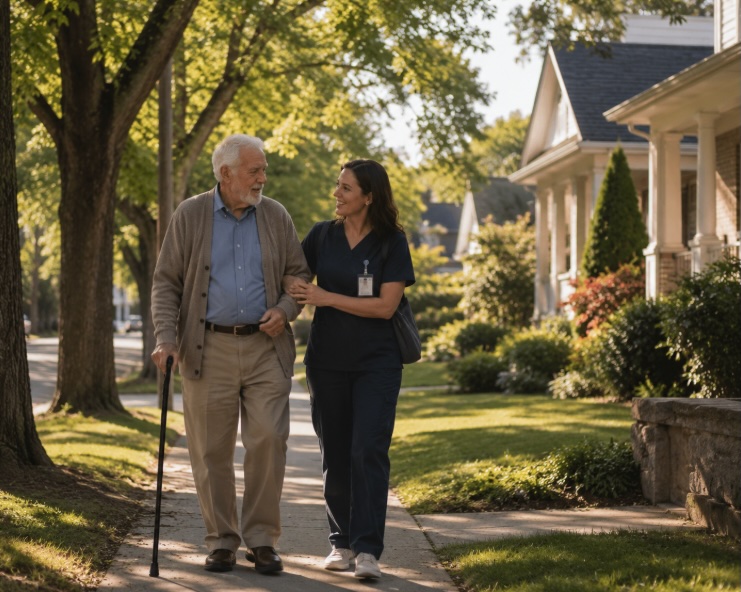
Helping with bathing, dressing, and grooming. Preparing meals and encouraging proper nutrition. Providing medication reminders throughout the day. Assisting with mobility and fall prevention. Offering companionship and reducing isolation. Supporting memory care needs for seniors with dementia. Handling light housekeeping, laundry, and errands. Accompanying seniors to appointments and outings.
The goal is not to take over. It is to support independence in a way that keeps the senior safe and comfortable at home.
Live-In Care vs. Assisted Living: An Honest Comparison
This is the question most families wrestle with. Both options provide daily support. The differences come down to environment, cost, and quality of life.
The Case for Staying Home
Assisted living facilities offer structure, staff, and social programming. For some seniors, that works well. For many others, leaving home creates unnecessary stress and decline.
Research consistently shows that seniors do better in familiar environments. Their own bedroom. Their own kitchen. Their own neighborhood. The routines they have built over decades.
Live-in care preserves all of that. There is no adjustment to a shared dining room or a new room down a hallway. The senior stays exactly where they are most comfortable.
One-on-One Attention
In an assisted living facility, staff members are responsible for many residents at once. Attention is divided. Schedules are communal.
With live-in care, your loved one has one dedicated caregiver focused entirely on them. That relationship builds over time. The caregiver learns preferences, habits, and patterns. That familiarity is genuinely valuable, especially for seniors with memory concerns.
Cost
Assisted living costs vary widely. In New Jersey and Southwest Florida, monthly fees often range from $4,000 to $7,000 or more. That figure does not always include additional services.
Live-in care costs are comparable or lower in many situations. Families are often surprised by this. It is worth getting a clear comparison before assuming assisted living is the more affordable path.
The Bottom Line on This Comparison
If your loved one wants to stay home and their needs can be safely met there, live-in care is almost always worth serious consideration. It is not a lesser option. For many families, it is the better one.
When Does Someone Actually Need Live-In Care?
There is no single trigger. Families usually reach this point gradually. A few signs suggest it may be time to explore live-in support.
Safety Has Become a Real Concern
Falls are one of the leading causes of injury in older adults. If your loved one has fallen recently, or if the risk seems high, overnight supervision matters. A caregiver who is present through the night provides a level of safety no monitoring device can fully replace.
Recovery After Hospitalization
Hospital discharge is a vulnerable time. Seniors returning home after surgery, illness, or a cardiac event often need more support than family members can realistically provide. Live-in care bridges that gap during recovery and can transition into ongoing support if needed.
Dementia or Memory Loss Is Progressing
Wandering, nighttime confusion, and difficulty managing daily tasks are common as dementia advances. These situations are hard for families to manage alone. A trained caregiver in the home provides structure, safety, and patience around the clock.
The Senior Is Isolated or Recently Widowed
Loneliness is a genuine health risk. Seniors who live alone and lack daily social contact experience measurable declines in cognitive and physical health. A live-in caregiver provides consistent human presence. That companionship has real value beyond the practical tasks.
Family Members Cannot Be There
Adult children living out of state face an impossible situation. Visiting when possible is not the same as consistent daily care. Live-in care provides a reliable, professional presence when family cannot be.
Families Across New Jersey and Southwest Florida Trust This Approach
Families in communities like Leisure Village West, Holiday City, and Greenbriar Woodlands in Ocean County have found that live-in care allows their loved ones to remain home far longer than expected. The same is true in communities like Pelican Bay, Bonita Bay, and Grey Oaks along the Southwest Florida coast.
Every situation is different. The right time to explore live-in care is before a crisis makes the decision for you.
If you are trying to understand your options, we are here to help. There is no pressure and no obligation.
We’re here for you.
Are you considering senior transportation services, or which transportation option is the right fit for your loved one? Let us be your guide!
Discover more from Affordable Senior Home Care
Subscribe to get the latest posts sent to your email.